Showing all 6 results
What is an ultrasonic cleaning tank?
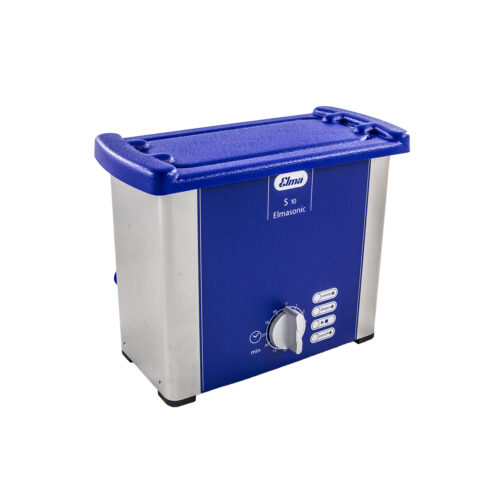
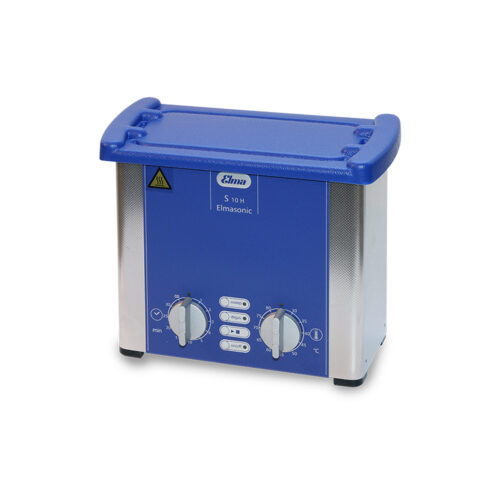
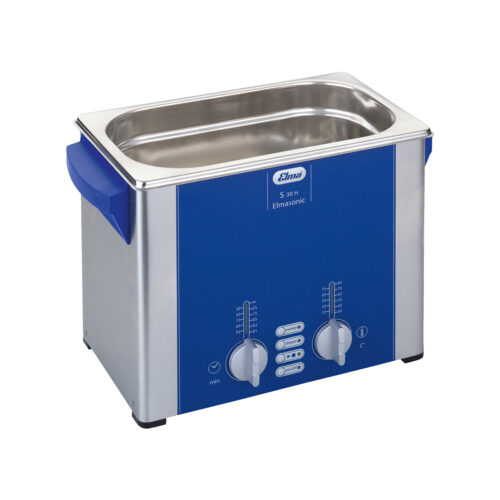
An ultrasonic cleaning tank, also known as an ultrasonic bath, is a device used to effectively clean various objects using ultrasonic waves. This type of device is commonly used in many fields, including industry, medicine, jewelry, watchmaking, electronics, optics, and many others.
Here is how an ultrasonic cleaning tank generally works:
- Principle of ultrasound The ultrasonic cleaning tank uses piezoelectric transducers to convert electrical energy into high-frequency ultrasonic vibrations (generally between 20 and 400 kHz). These vibrations are transmitted through the cleaning liquid contained in the tank.
- Formation of cavitation bubbles : Ultrasonic vibrations generate a phenomenon called cavitation, where small vacuum bubbles form and quickly implode in the cleaning fluid. These implosions create shear forces and high-energy liquid jets that act on the surface of the objects to be cleaned.
- Deep cleaning : the shear forces and liquid jets generated by cavitation make it possible to effectively dislodge contaminants, dirt, particles and residues from objects to be cleaned, even in hard-to-reach areas or crevices.
- Using cleaning fluid The ultrasonic cleaning tank is filled with a specially formulated cleaning liquid to optimize the ultrasonic cleaning process. This liquid can be ordinary water, a detergent solution, or a specific solvent, depending on the types of objects to be cleaned and the contaminants to be removed.
Ultrasonic cleaning tanks are available in a variety of sizes and capacities to meet specific cleaning needs. They are often used to clean a wide range of items, including metal parts, electronic components, medical instruments, jewelry, eyeglasses, watches, automotive parts, machine parts, and much more.
Examples of uses for an ultrasonic cleaning tank
Here are some examples of common uses for an ultrasonic cleaning tank in different fields:
- Manufacturing industry :
- Cleaning of mechanical parts, such as metal parts, tools, dies and molds.
- Removal of grease, oil, lubricants and production residues from parts.
- Surface preparation before coating, plating or painting.
- Electronics industry :
- Cleaning electronic components, such as printed circuits, electronic chips and connectors.
- Removal of solder flux, resin, grease and other contaminants from components.
- Automobile industry :
- Cleaning automotive parts, such as fuel injectors, carburetors, valves, pistons and cylinder heads.
- Removal of oil, grease, fuel deposits and combustion residues.
- Aerospace industry :
- Cleaning of aerospace components, such as turbines, compressors, injectors, heat exchangers and engine parts.
- Removal of grease, oil, lubricants and manufacturing process residues.
- Medical industry :
- Cleaning of medical instruments, such as surgical instruments, dental devices, endoscopic instruments and implants.
- Elimination of biocontamination, bodily fluids and drug residues.
- Jewelry and watches :
- Cleaning of precious metal jewelry, precious stones and watches.
- Removal of dirt, dust, body oils and polish residue.
- Food and catering industry :
- Cleaning of kitchen equipment, such as baskets, filters, dishes, utensils and cooking instruments.
- Removal of food residue, fats, oils and cooking deposits.
These examples illustrate the diversity of possible applications of an ultrasonic cleaning tank in different industrial sectors to clean a variety of objects and materials.