


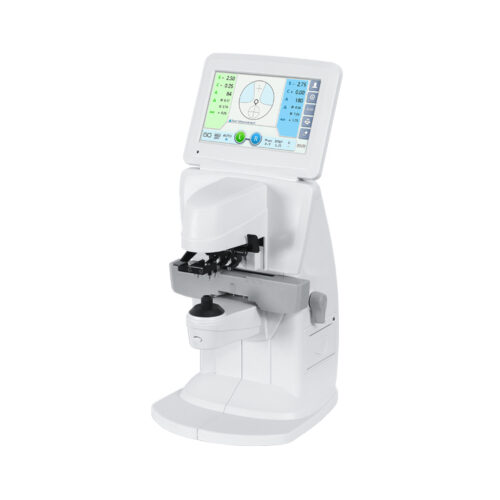
Automatic Frontofocometer JD-2600A
1 490,00€ excluding tax
Automatic Frontofocometer JD-2600A
- Compact & Modern Design
- 7" Color Touchscreen & Tiltable»
- Easy navigation using icons
- Automatic lens recognition
- Dimensions: h405 x 222 x 161 mm
- Free trial upon request (please contact us)
- Warranty: 12 months
- Information: Ink and thermal roller not included
Add to favoritesRemove from favorites
Add to favorites
- SKU: 88923-01
Description
Features
| Measurement range | |
| Sphere | 0 ~ ± 25 δ |
| Cylinder | 0 ~ ± 9.99 δ |
| Axis | 0-180° (in 1° increments) |
| Addition | 0-9.99 δ |
| Prism | 0-15 Δ |
| Increments | 0.01 / 0.12 / 0.25 δ |
| Measurement method | |
| Cylinder | + / – / Mix |
| Prism | XY, PB |
| Contact lens | Flexible / Rigid |
| Measurement method | Simple / Progressive / Automatic Recognition |
| UV transmission | Measured in % |
| Specifications | |
| Glass diameter | 20-108 mm max. |
| PD | 40-90 mm (0.5 mm increments) |
| Measurement speed | 0.1s |
| Display | 7" Tilting Color Touchscreen» |
| Printer | Integrated thermal printer |
| Weight | 5.5kg |
| Power supply | 100-240V, 50-60Hz |
| Compliance | THIS |
Zusätzliche Informationen
| Gewicht | 7 kg |
|---|
You will like also
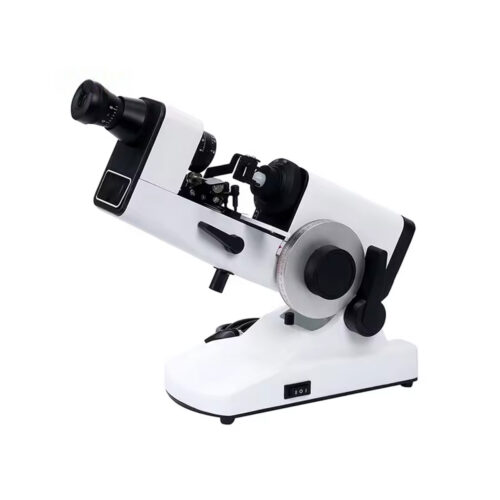
What is a frontofocometer?
A lensometer is an instrument used in optometry to measure the optical parameters of corrective lenses, such as power, axis, and image quality. It is primarily used to check and adjust corrective eyeglasses in order to to ensure optimal vision for the patient. The lensometer can also be used to determine the characteristics of ophthalmic lenses and contact lenses.
Why use an automatic lensometer?
Using an automatic lensometer offers several advantages:
- Time saving: measurements are taken automatically, which allows for save time compared to manual methods.
- Accuracy: Automatic measurements are often more accurate and reliable because they reduce potential human errors associated with manual methods.
- Ease of use: automatic lensmeters are generally user-friendly and easy to use, This allows a greater number of professionals to use them effectively.
- Versatility: Some automatic models offer greater versatility in terms of measurement types and optical parameters that can be evaluated, making them suitable for a wider range of optometry needs.
- Integration: Some automatic lensmeters can be integrated with other equipment or software for a smoother workflow and simplified data management.
In summary, the use of an automatic lensometer allows for’optimize the measurement process optical parameters, offering speed, precision, ease of use and versatility.